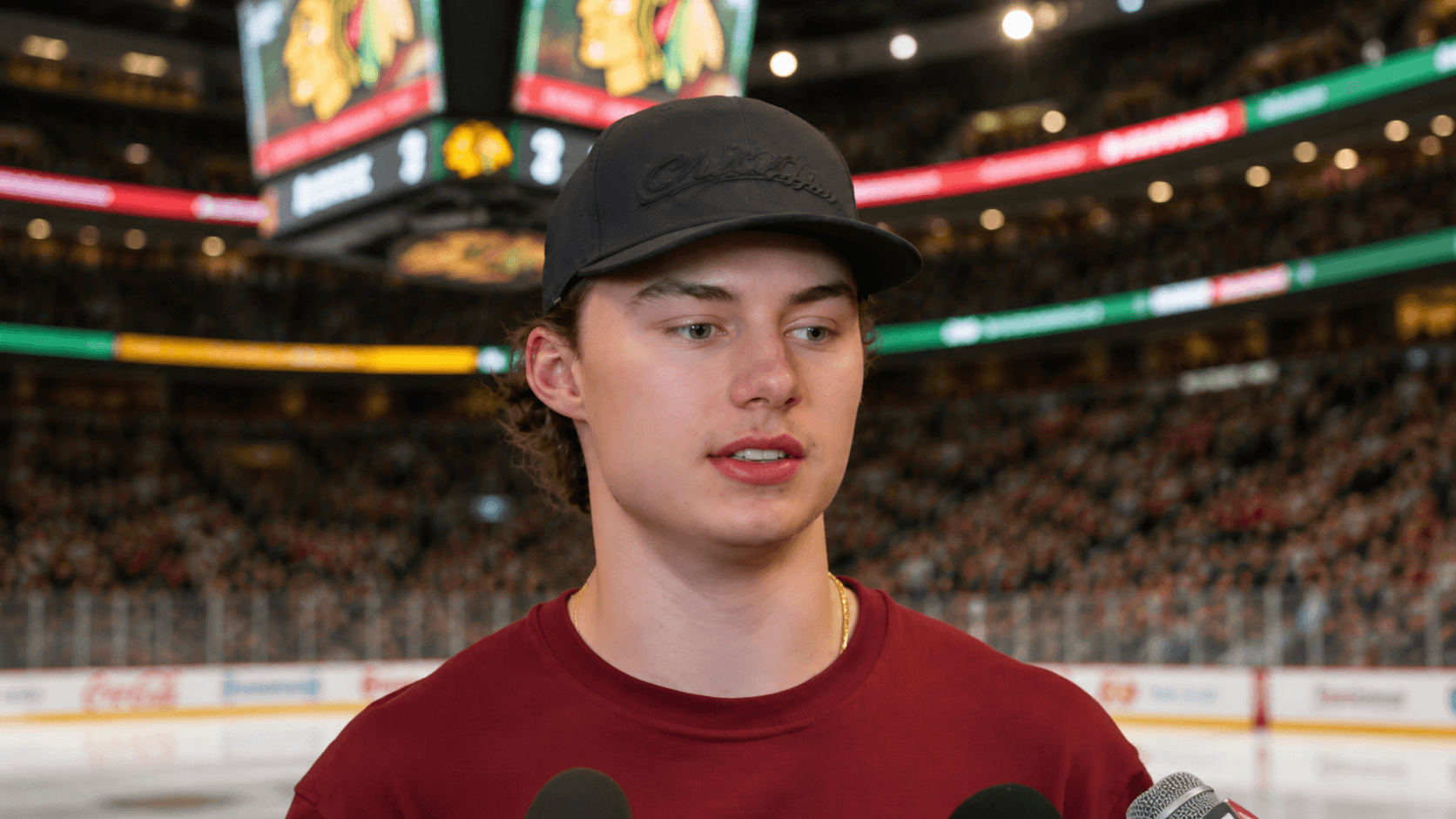
The Chicago Blackhawks have reached a pivotal point in their rebuild, and it centers on Connor Bedard‘s next contract. After completing the final season of his entry-level deal, the 20-year-old franchise cornerstone is now a restricted free agent, with extension discussions expected to dominate Chicago’s offseason agenda.
Bedard’s 2025-26 campaign only strengthened his bargaining position. Despite missing time with a December injury, he posted 75 points in 69 games, including a career-high 30 goals and 45 assists. More importantly, his overall game showed meaningful growth. He scored 23 goals at even strength, improved his faceoff percentage to 47.1, and logged more than 20 minutes per game while carrying much of Chicago’s offensive workload.
The Blackhawks have made it clear that keeping Bedard in Chicago long term is the organization’s top priority. The question is not whether a deal gets done, but what form it takes.
Long-term commitment or strategic bridge deal for Connor Bedard?
The biggest hurdle in negotiations appears to be contract length. Chicago would undoubtedly prefer an eight-year commitment that locks up its franchise player through his prime years. Bedard, however, may have reasons to consider a shorter bridge contract.
NHL analyst Jay Zawaski believes the organization is prepared to make a significant bet on its young star.
“I think the Hawks would really like to get it done long-term and are willing to put the bet on Connor Bedard that he’s going to be the player they think he’s gonna be,” Zawaski said. “Give him the bag, give him the years, give him everything.”
Zawaski also pointed to the player’s leverage.
“Connor, though, is a really savvy kid and might see the opportunity to take a shorter deal, a bridge deal, maybe for a little bit less and know that he’s really gonna hit it out of the park when he hits UFA and really, really take home a lot of money.”
With the NHL salary cap rising sharply and a new generation of stars approaching extension eligibility, Bedard’s contract could become a benchmark deal across the league.
“But money talks, and I think that’s gonna have to be a big number on the front,” Zawaski said.
Blackhawks must prove the rebuild is accelerating
From Chicago’s perspective, this negotiation extends beyond dollars. It is also about convincing Bedard that the team’s trajectory matches his ambitions.
The Blackhawks have assembled one of hockey’s deeper prospect pools and recently reaffirmed their commitment to the current plan by retaining general manager Kyle Davidson. The front office is also actively searching for top-six talent capable of complementing Bedard and reducing the burden he has carried since entering the league.
Zawaski noted that Bedard appears invested in the organization’s future.
“He says he wants to be here. I believe him,” Zawaski said. “He seems happy here. I think he believes in what the Hawks are doing. He sees what’s coming down the pipeline and some of the young players that arrived at the end of last year.”
That optimism matters. Bedard skipped the 2026 IIHF World Championship to focus on recovery and arrive fully healthy for training camp, underscoring his focus on the upcoming season.
Chicago still controls the process through RFA rights, but Bedard holds the leverage. His performance has validated his superstar status, and his contract decision will shape the next phase of the Blackhawks’ rebuild. Whether it ends with a bridge deal or a franchise-record extension, the outcome will define Chicago’s future for years to come.